
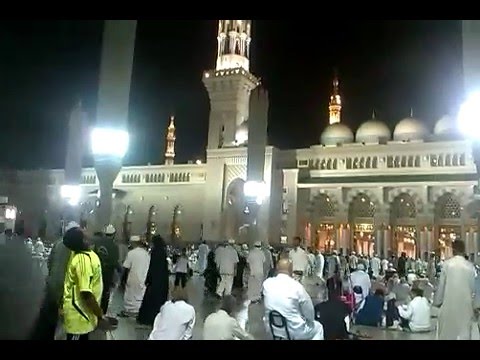
Al-Masjid an-Nabawi, also known as the Prophet's Mosque, is one of the most sacred mosques in Islam. It is located in the city of Medina, Saudi Arabia. Here are some key points about Al-Masjid an-Nabawi:
Significance: Al-Masjid an-Nabawi holds immense importance for Muslims as it is the second holiest mosque in Islam, after the Masjid al-Haram in Mecca. It was established by the Prophet Muhammad (peace be upon him) after his migration from Mecca to Medina.
Prophet Muhammad's Mosque: Al-Masjid an-Nabawi was the mosque where the Prophet Muhammad (peace be upon him) led prayers and delivered sermons during his time in Medina. It served as the center of the Muslim community and the focal point of various religious and social activities.
Architecture: The mosque has undergone significant expansions and renovations over the centuries. It has a distinctive green dome that covers the location of the Prophet Muhammad's tomb. The original mosque was much smaller, but successive expansions have increased its capacity to accommodate millions of worshippers.
Rawdah: Within Al-Masjid an-Nabawi, there is a section known as Rawdah or Ar-Rawdah Al-Sharifah. It is considered a blessed area, and it is believed that supplications made in this space are particularly accepted by Allah. Pilgrims and visitors often strive to spend time in the Rawdah and offer prayers there.
Visiting the Mosque: Al-Masjid an-Nabawi is open to Muslims and non-Muslims alike, with certain restrictions. Non-Muslims are not allowed to enter the sacred areas but can visit the outer courtyard and appreciate the mosque's architectural beauty and historical significance.
Pilgrimage and Worship: Many Muslims include a visit to Al-Masjid an-Nabawi as part of their religious pilgrimage to Mecca for Hajj or Umrah. They offer prayers, seek blessings, and send greetings to the Prophet Muhammad (peace be upon him) at his grave within the mosque.
Al-Masjid an-Nabawi stands as a symbol of devotion and reverence for Muslims worldwide. It serves as a place of worship, remembrance, and spiritual solace, attracting millions of pilgrims and visitors each year. The mosque's serene atmosphere and historical connection to the life of the Prophet Muhammad (peace be upon him) make it a cherished and sacred site in the Islamic faith.


No comments:
Post a Comment